The format will be mixed, involving alternating days of presentations and local field visits, with a day of workshops. We would like to particularly emphasise presentations on the subject of total communities within the early Palaeozoic: exceptional preservation, ecological studies and neglected or poorly-known groups. Other subjects within the IGCP735 remit are very welcome also, of course!
Presentations can be in the form of traditional talks (.ppt, .odp or .pdf) or posters. If you would like to present a different style or format of talk to the normal types (for example, a field report of interesting discoveries, even if you are unfamiliar with formal scientific presentations), please just ask; we would be delighted to receive such suggestions and advise! Most talks are likely to be 20 minutes (including questions), depending on the number of presentations offered. We will be selecting some talks for longer slots based on their fit to the programme and potential for wide interest.
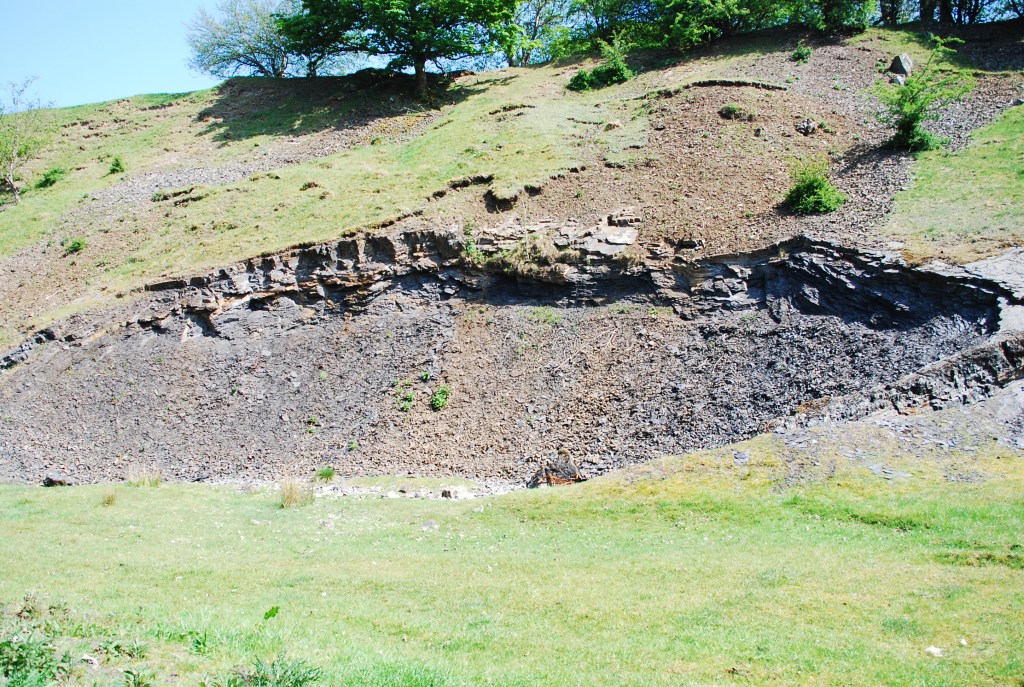
The field visits will be to a range of local sites within the Ordovician (Darriwilian to early Sandbian) Builth–Llandrindod Inlier. The inlier preserves the history of a volcanic island complex, and is the focus of the nascent Heart of Wales Geopark (https://heartofwalesgeopark.org.uk/). The area is home to many sites with a degree of exceptional preservation, and some major Konservat-Lagerstätten such as Llanfawr and the newly-discovered Castle Bank (which will be included in the itinerary). The landscape, culture and history of the area are also remarkable, and these will not be neglected! Some of these sites are within walking distance of the conference venue, and transport will be provided for slightly more distant ones, or for those with more limited mobility; the costs of this are included in the conference fee.
The workshops will include three that are currently planned:
Builth Inlier exceptional preservation (led by Joe Botting and Lucy Muir)
The Builth-Llandrindod Inlier includes a wide range of unusual and exceptional preservation from a variety of palaeoenvironments in the context of a volcanic island system. This ranges from the shallow-water siliciclastics of Llandegley Rocks, to pyritised fossils in offshore black mudstone such as Llanfawr Lagerstätte, and the Burgess Shale-type preservation of Castle Bank. There are numerous more minor deposits as well, such as the Holothurian Bed and Little Wern. It is extremely unusual to have such a range of exceptional preservation in such a small area, and this generates great potential for understanding the Ordovician palaeoecology beyond the patterns seen among ‘normal’, biomineralised fossils.
This workshop will allow you to examine examples of fossils from a good number of these localities, together with their sedimentary and stratigraphic contexts. Certain groups of exceptionally preserved fossils are relatively common in a wide range of palaeoenvironments of the inlier, including some (e.g. articulated echinoderms) with a few, widely-distributed species, but many others (e.g. sponges, palaeoscolecidans and non-biomineralised arthropods) in which almost no species are known from more than one site. In addition to highlighting the diversity of ecological patterns between different groups, this will allow direct comparisons of the styles of preservation and likely taphonomic biases between sites. This in turn leads to interpretations as to which groups are likely to be ecologically restricted, and which were probably widespread but limited purely by preservation, allowing us to build a better understanding of temperate Ordovician palaeoecology.
Recognition and interpretation of fossil sponges (led by Joe Botting)
[Note: this focuses mainly on sponges in siliciclastic sediments, rather than carbonates]
Sponges are one of the most abundant and diverse groups of fossils in Burgess Shale-type faunas, and can also be very important in later Palaeozoic Konservat-Lagerstätten. However, they can be challenging fossils to interpret, and in many cases, even to identify. Much of the historical palaeontological literature suffers from over-simplification of the morphology, assumptions about original skeletal mineralogy, and lack of detailed comparisons to modern groups that is capable of highlighting either useful similarities or genuine differences. This has led, amongst other things, to numerous Precambrian objects being described as sponges on very flimsy or misleading evidence. It has also led to a radical overhaul of how to interpret many of the Cambrian and Ordovician sponge groups in terms of their relationships to modern groups.
This workshop will include a general introduction, and then allow attendees an opportunity to examine both modern sponges and a wide range of fossil examples. You will be able to assess how well particular fossils can be interpreted, and how closely they can be compared to extant lineages, with a particular focus on problematic groups like the “Reticulosa” and Ascospongiae (“protomonaxonids”). The importance of understanding taphonomy will be highlighted, together with morphological aspects like assessing the complexity of the skeleton. We will also look at how to identify whether an object is actually a fossil sponge at all, so please bring potential sponges with you to act as test subjects!
Bivalved arthropods (led by Steve Pates)
Identification and ecology of Cambrian and Ordovician macro- and micro-forms. Numerous iconic early arthropods are described as ‘bivalved arthropods’, a polyphyletic grouping of stem-group arthropods, stem-group mandibulates, stem-group crustaceans, and crown-group crustaceans. These animals were among the first miscroscopic and macroscopic arthropods to enter the pelagic realm in the Cambrian, and played a variety of ecological roles in ancient oceans including as suspension feeders, predators and scavengers. Macroscopic bivalved arthropods include some of the most charismatic and well-known Cambrian animals from Burgess Shale-type deposits, including Isoxys, Canadaspis and Ercaicunia and more recently described animals like Fibulacaris.
In the Ordovician, archaeostracans dominate. Cambrian microscopic bivalved forms like phosphatocopines and bradoriids contributed hugely to the microbenthos, with the latter group including some pelagic forms. In the Ordovician the first ostracods diversified, with the first pelagic taxa originating in the Silurian.
In this workshop we will explore the diversity and interrelationships of Cambrian and Ordovician bivalved arthropods, and cover some key morphological features used to distinguish major groups. We will also discuss approaches to inferring the ecological roles of these extinct animals, and their contribution to Cambrian and Ordovician ecosystems. The workshop will combine specimen study with seminar/discussion sessions.
 IGCP735 Llandrindod